
9 Novembre 2026
Empowering Displaced Communities: Lessons & Legacy from the Educational Hubs & Mobile Centres Project
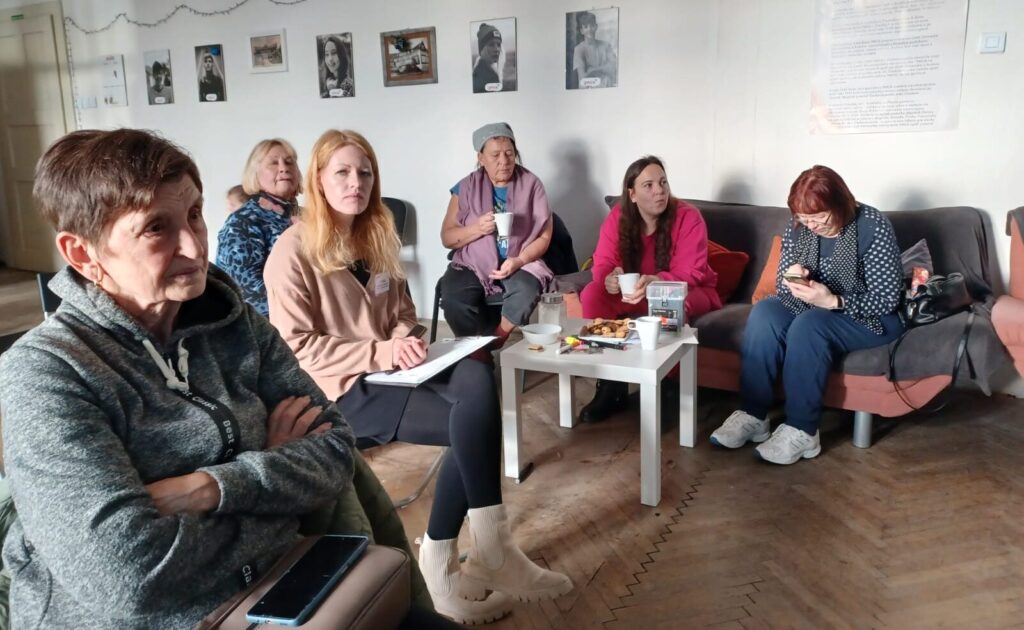
Over an 18-month journey, YMCA Europe, alongside YMCA Romania, YMCA Slovakia, and YMCA Germany, has led a social innovation initiative to reshape refugee inclusion across Europe.
Co-funded by the European Union through the ESF+ Social Innovation+ initiative and supported by the Accenture Foundation, the Educational Hubs and Mobile Centres (EHMC) project moved beyond short-term emergency relief toward long-term, community-rooted integration for displaced Ukrainians and local host communities.
As the pilot phase concludes, the EHMC framework stands out as a proven model of social innovation – combining fixed community hubs, agile mobile units, participatory co-creation, and multi-level policy advocacy.
Project Impact at a Glance
Between September 2025 and April 2026, the EHMC model was deployed across three border and near-border host communities: Baia Mare (Romania), Liptovský Mikuláš and Bratislava (Slovakia), and Görlitz and Niesky (Germany).
Key Project Achievements:
- 6,838 total instances of participation (114% of the 6,000 baseline target)
- 2,492 Ukrainian refugees directly engaged across core service pillars
- 4,346 verified participants in community cohesion and cultural events
- 665 children enrolled in childcare & education (target: 275)
- 860 individual and group MHPSS counseling sessions logged (target: 370)
- 544 refugees mentored in career and employment pathways
- 67 refugees transitioned into jobs, internships, or new business registrations
Model Development: Built With, Not For
The EHMC project began with an extensive baseline needs assessment covering 220 Ukrainian refugees. Language access (86.8%), employment (75%), housing (65%), and psychological support (58.6%) emerged as urgent priorities, shaping the project’s Theory of Change and core operational pillars.
Dual-Service Architecture
- Fixed Educational Hubs: Urban spaces delivering structured language, employment, and youth activities.
- Mobile Centres: Agile units extending services to isolated rural and suburban regions, such as the wider Oberlausitz area in Saxony.
- Collaborative Innovation Labs (CoLabs): Local design workshops and capacity building initiatives ensuring refugees and municipal stakeholders co-created integration solutions together.
Four Core Pillars: Results & Evaluation Findings
“With the engagement of Ukrainian project officers, there was direct access to the Ukrainian community and its problems without any language barriers. This made it possible to react in a concrete and differentiated way.” — CVJM Schlesische Oberlausitz, Germany
“The most visible change is the shift from preparation and informal support to structured community engagement. The hub now has more stability, clearer services, stronger staff involvement, better cooperation with authorities, and a more active community around it.” — Tudor Rus, Location Lead, YMCA Romania
Systems Advocacy & Scaling Policy Demands
The final phase of EHMC focused on translating field evidence into policy recommendations for local, national, and European decision-makers, showcased during the European Community Forum in Brussels:
- Fund “Third Places” Long-Term: Community hubs and encounter spaces require sustainable, multi-year core funding rather than fragmented short-term project grants.
- Protect & Support Children: Up to 38% of refugees are children. Municipalities must provide dedicated language learning, psychological care, and professional interpreters so children are not burdened with translating for their parents.
- Streamline Administrative Barriers: Accelerate qualification recognition, reduce bureaucratic hurdles in housing/employment, and expand native-language integration support.
- Outreach Beyond Established Networks: Integration work must extend into everyday neighborhoods, workplaces, and rural areas to actively reduce reservations and build social trust.
The Lasting Legacy of EHMC
Although the pilot evaluation period has concluded, services continue across all partner sites. Referral services in community cafes, youth activities in Niesky, Görlitz, and Baia Mare, and local stakeholder dialogues carry forward the lessons learned from the EHMC project.
By demonstrating how mobile outreach and static hubs can work together, the EHMC project provides a tested, transferable framework for building cohesive, resilient communities across Europe.
To bridge local implementation with broader European policy, YMCA Europe and its partners convened the final dissemination event, titled From Emergency Response to Sustainable Integration: Scaling Community-Based Solutions for Refugee Inclusion in Europe, at the European Parliament INFO Hub in Brussels.
The Community Forum brought together 77 key participants representing 44 civil society organisations and local, national, and European public authorities across 24 countries. Institutional leaders – including representatives from DG HOME, regional council officials, youth advocates, and project beneficiaries – engaged in critical panel discussions alongside closing keynote remarks by MEP Juan Fernando López Aguilar.
By uniting high-level policy expertise with frontline civil society experience, the event provided a platform to translate ground-level achievements into actionable European integration policies.
Beyond celebrating project milestones, the Brussels Forum established how a social innovation model tested in local communities can generate transferable knowledge for systemic European adoption. The discussions emphasised that sustainable refugee integration cannot be delivered in isolation; rather, it requires multi-sectoral cooperation where displaced individuals actively co-design the services meant to support them. Although the formal pilot phase has concluded, the methods, evidence, and cross-border networks built through EHMC continue to operate across partner communities in Romania, Slovakia, and Germany – offering a durable, adaptable blueprint for inclusive community-building across Europe.
Disclaimer & Acknowledgement:
Co-funded by the European Union. Views and opinions expressed are however those of the author(s) only and do not necessarily reflect those of the European Union or the European Social Fund Agency (ESFA). Neither the European Union nor the granting authority can be held responsible for them.
The post Empowering Displaced Communities: Lessons & Legacy from the Educational Hubs & Mobile Centres Project appeared first on YMCA Europe.
Fonte: YMCA EUROPE
Leggi sul sito originale